هل أنت مستعد لتصبح رائدًا في مجال الصيدلة؟ تقدم بطلبك اليوم لتصبح جزءًا من حركة الصيدلية التي تنبض في قلب نيو مكسيكو.
 (505)-272-3241
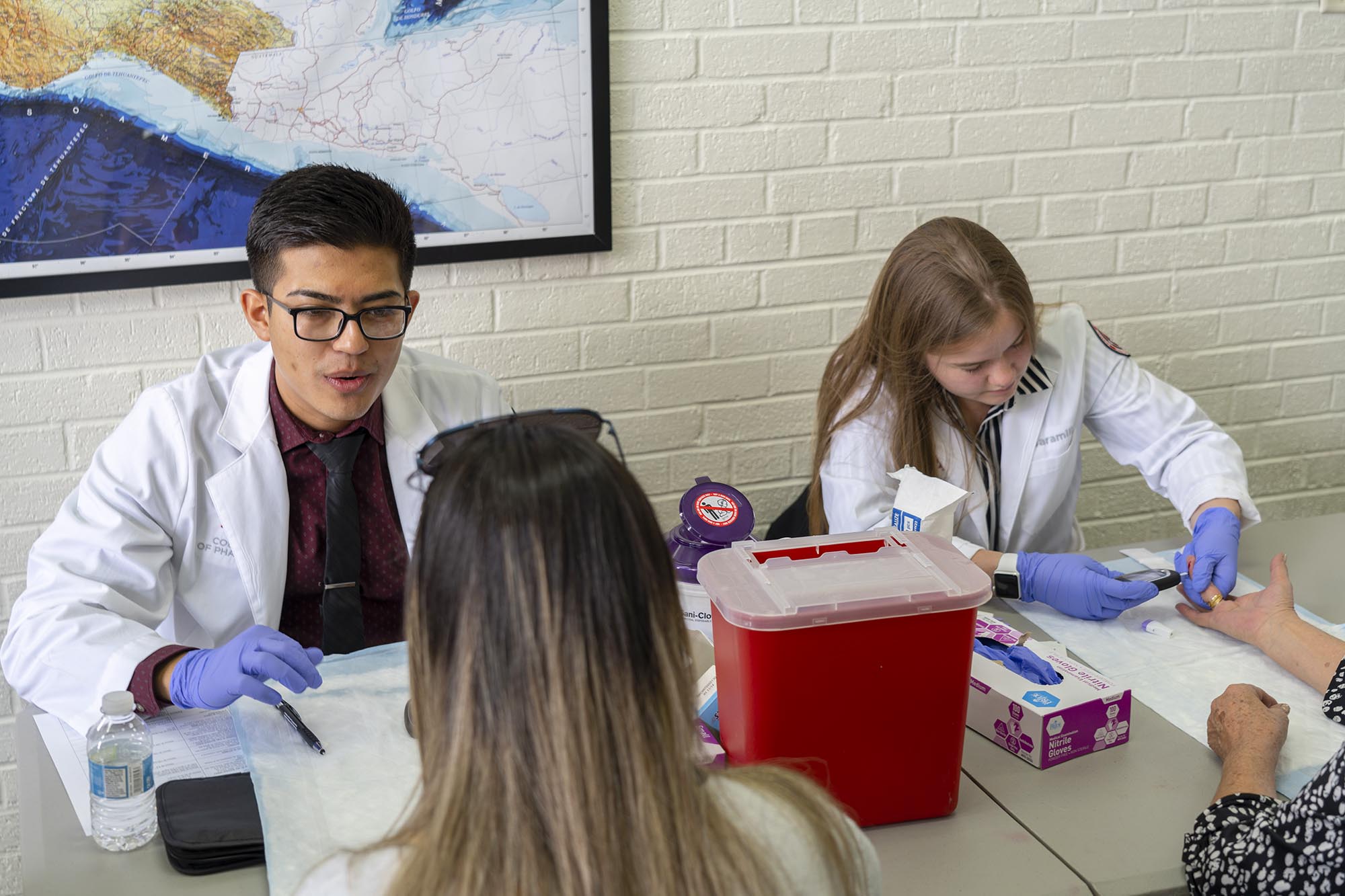
خلال الوقت الذي تقضيه في كلية الصيدلة بجامعة نيو مكسيكو ، ستقوم ببناء مجموعة واسعة من المهارات العملية والمهنية بينما تسعى للحصول على درجة دكتوراه في الصيدلة. قم بتطبيق قدراتك في إعدادات العالم الحقيقي أثناء دورات الصيدلة.
فيما يلي الكفاءات والمهارات المطلوبة التي ستطورها أثناء حصولك على درجة دكتور صيدلة.
تصميم وتوثيق وتنفيذ ومراقبة وتقييم وتعديل خطة رعاية صيدلانية قائمة على الأدلة فردية تضمن سلامة المرضى والنتائج العلاجية المثلى.
1.1 تطوير وتقييم وتنفيذ و / أو مراقبة خطة رعاية فردية للمرضى لتحقيق النتائج العلاجية المرغوبة لعلاج مرض أو اضطراب بأهداف علاجية قابلة للقياس والتحقيق. CAPE 1.1، 2.1، 3.1
1.2 حدد صيغة المنتج الدوائي المناسب وطريقة الإعطاء لتصميم ومراقبة و / أو تعديل نظام (نظم) العلاج الفردي باستخدام الحرائك الدوائية و / أو الديناميكا الدوائية و / أو البيانات الجينية الدوائية. CAPE 1.1، 2.1، 3.1
1.3 تحضير / تركيب ، وصرف ، و / أو إدارة منتجات صيدلانية آمنة وفعالة. CAPE 2.2
1.4 أداء الأنشطة التي يمنح من أجلها مجلس الصيدلة في نيو مكسيكو شهادة سلطة إلزامية محددة. CAPE 3.2، 3.3
تعزيز العافية والوقاية من الأمراض وإدارة الحالات الطبية وتقليل الفوارق الصحية من خلال التثقيف والدعوة والأنشطة الأخرى على مستوى السكان والمرضى الفرديين.
2.1 تثقيف الجمهور ومقدمي الرعاية الصحية الآخرين فيما يتعلق بالصحة والعافية ؛ الوقاية والعلاج من الأمراض والحالات الطبية والأحداث الضارة بالمخدرات ؛ والاستخدام الأمثل للأدوية والأجهزة الطبية والمنتجات الطبيعية والمكملات الغذائية. كيب 2.3 ، 2.4 ، 3.2. 3.3 ، 3.5
2.2 المشاركة في عمليات صنع القرار المتعلقة بالسياسة الصحية بناءً على تحليل البيانات الوبائية والاقتصاد الدوائي ، وحصول المريض على الرعاية ، ومعايير استخدام الأدوية ، ومراجعة الأدوية واستراتيجيات الحد من المخاطر. CAPE 4.2، 4.3
2.3 المشاركة في تطوير وتوفير الخدمات التعاونية والمهنية للوقاية من الأمراض واكتشافها وإدارتها وتحسين نتائج المرضى من خلال الإدارة الفعالة للأدوية. كيب 3.4 ، 3.5
المشاركة في إدارة الأنظمة التي تعزز وتتحكم في التوزيع الآمن والدقيق والفعال وفي الوقت المناسب والفعال من حيث التكلفة للأدوية والأجهزة ذات الصلة.
3.1 المشاركة في استخدام وتقييم الأنظمة لتحديد ومنع إساءة استخدام الأدوية المحتملة والأخطاء الدوائية والأحداث العكسية للأدوية. كيب 3.1 ، 4.3
3.2 مناقشة مبادئ الاقتصاد الدوائي ومفاهيم جودة الحياة المتعلقة بالصحة لتحسين رعاية المرضى وتخصيص موارد الرعاية الصحية. كيب 3.3 ، 3.5
3.3 مراجعة وتفسير وتطبيق إرشادات الممارسة وسياسة استخدام الأدوية وفقًا لخطة أو برنامج أو نظام رعاية صحية محدد. CAPE 3.3، 4.4
3.4 توفير رعاية آمنة وفعالة من حيث التكلفة وعالية الجودة للمرضى باستخدام ممارسات إدارة الموارد المناسبة. كيب 3.1 ، 3.3 ، 4.3
3.5 استخدام الموارد الإلكترونية لتحسين تقديم الأدوية والخدمات بشكل دقيق ومناسب وفي الوقت المناسب. (CPOE، EHR) CAPE 2.2
4.1 استخدم أنظمة تكنولوجيا المعلومات لاسترداد البيانات والأدب للمساعدة في توفير معلومات الأدوية ، ورعاية المرضى ، وتوزيع الأدوية ، وسلامة المرضى ، والتعويض. CAPE 2.2، 3.1، 4.3
4.2 تفسير وتقييم وتطبيق المعلومات من الأدبيات الأولية وكذلك الموارد الثانوية والثالثية لإدارة رعاية المرضى بشكل فعال. CAPE 1.1، 2.2، 3.1، 4.3
إظهار مهارات الاتصال والتعاون ومهارات التعامل مع الآخرين بشكل فعال لتبادل المعلومات بشكل فعال والعمل الجماعي مع المرضى ومقدمي الرعاية والوصفات الطبية ومقدمي الرعاية الصحية الآخرين.
5.1 استخدم المهارات الشفوية والمكتوبة والوسائط المتعددة للتواصل بشكل فعال مع المرضى ووصفات الأدوية وغيرهم من المهنيين الصحيين ومقدمي الرعاية وأفراد المجتمع. CAPE 3.6، 4.1، 4.4
5.2 إظهار الحساسية والاستجابة للثقافة والتنوع والهوية في جميع الاتصالات. كيب 3.3 ، 3.5
5.3 التعاون ، والتعاون ، والتواصل مع فرق متعددة المهنيين لضمان أن الرعاية الصحية متكاملة ومستمرة وموثوقة. كيب 4 ، 1.2
إظهار سمات المهني ، بما في ذلك الالتزام والمساءلة عن تنفيذ المسؤوليات المهنية ، والحفاظ على الكفاءة المهنية ، والالتزام بالمبادئ القانونية والأخلاقية.
6.1 إظهار سمات ومبادئ الاحتراف. CAPE 4.1، 4.2، 4.4
6.2 اكتساب والحفاظ على التطوير الشخصي والمهني من خلال التعلم والتفكير المستمر الموجه ذاتيًا. CAPE 4.1
6.3 الانخراط في أنشطة مبتكرة باستخدام التفكير الإبداعي لتصور أفضل الطرق لتحقيق الأهداف المهنية. CAPE 4.3
كلية الصيدلة
عناية: شؤون الطلاب
MSC09 5360
1 جامعة نيو مكسيكو
ألبوكرك، نم شنومكس-شنومكس
